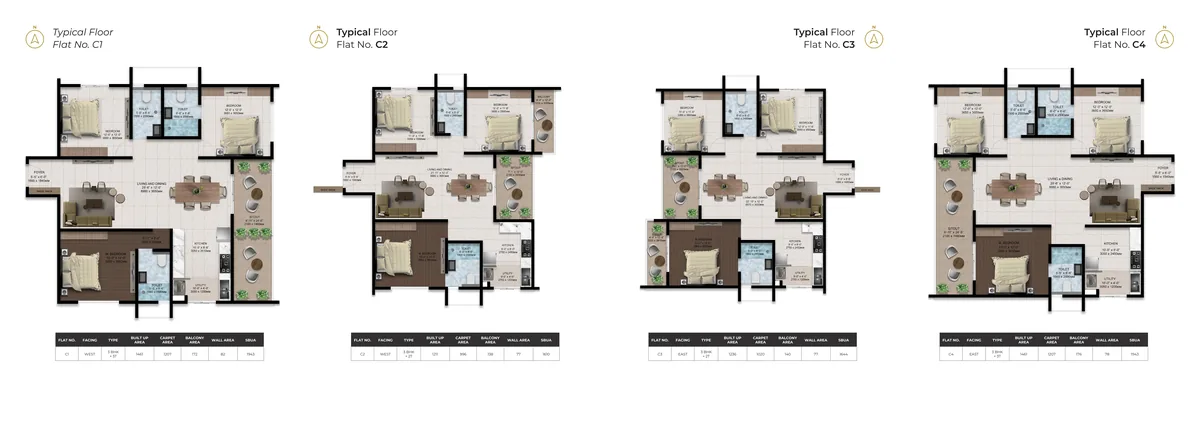
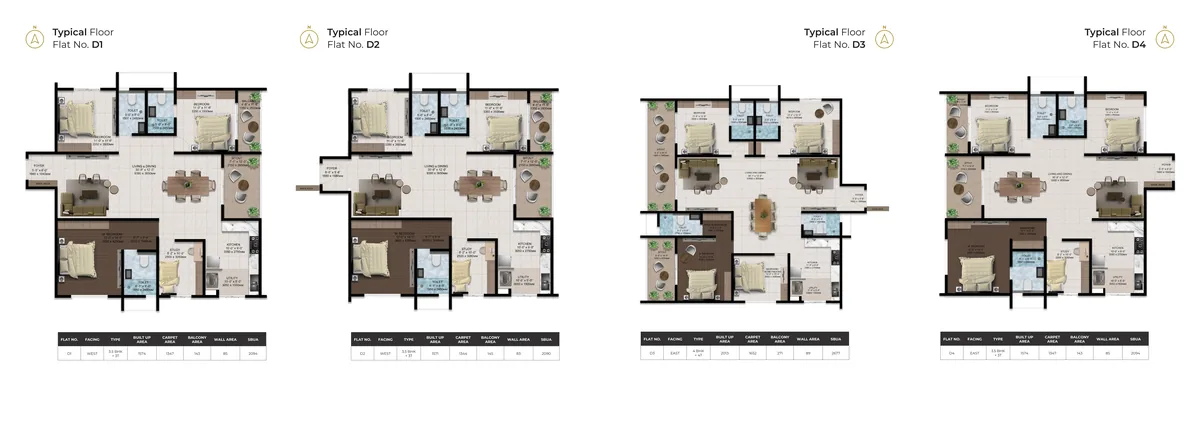
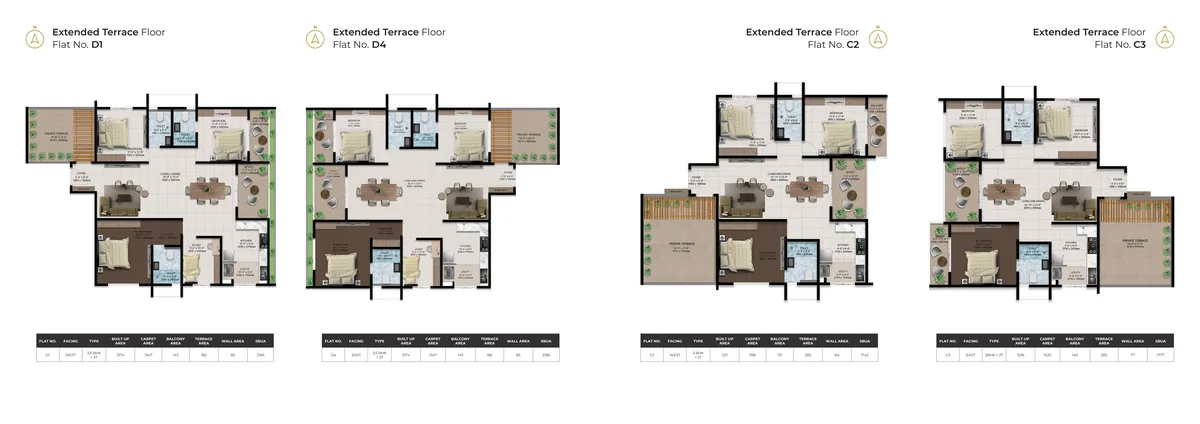
A 34-floor stack (Basement + Stilt + ~29 habitable floors) changes the floor-plan conversation versus a mid-rise project. In a very tall tower, floor selection can affect lift wait time, wind exposure, emergency-evacuation comfort, heat exposure, sound from the Sarjapur Road feeder, view direction, floor-rise premium, and personal comfort with height. Some buyers prefer the upper band (23-29) for views; others feel better in the lower-middle (15-22) where lift dependence and evacuation distance feel more manageable.
Tower selection should begin with the master plan. Ask where the tower sits relative to the main entry, central green, clubhouse, sports courts, service roads, visitor parking, school or retail parcels, STP/utility areas, and future phase construction. A tower that looks attractive in a launch stack may face years of neighbouring construction if later phases rise nearby. A tower facing the central green may command a premium, but buyers should verify whether the view remains protected after future phase planning.
Stack selection is where many buyers make rushed decisions. The same plan can feel different depending on orientation, sunlight, wind direction, road noise, and view corridor. East-facing and north-facing preferences are common in Bangalore, but practical comfort should come first. A harsh west-facing living room can increase heat load; a lower-floor unit facing a busy internal road can have noise; a high-floor unit near lift equipment or refuge levels may have different service considerations.
Lift planning is another key question in very tall residential towers. Buyers should ask how many passenger lifts and service lifts serve each core, whether there are fire lifts, how refuge areas are placed, and how maintenance access is managed. The answer belongs in the technical dratowers and approval documents, not just in a sales explanation. A premium high-rise can still become frustrating if vertical circulation is under-designed for the number of homes served by the core.
Parking should be matched to the unit type and household reality. Larger 3 and 4 BHK buyers may need two car parks now or in the future. Smaller-unit buyers should check whether parking is included, optional, stack/tandem, basement level-specific, or charged separately. In a large township, the distance from basement bay to lift core matters for everyday life, especially for senior residents, children, and grocery runs.
The best practical method is to shortlist by stack after a site-plan review. First eliminate towers with obvious lifestyle conflicts. Then compare two or three stacks in the same configuration for view, sunlight, lift distance, floor premium, and likely resale appeal. Do not choose a unit only because it is “available now” or because the EOI priority window creates urgency.